Verrucas Treatment in Hove & Southwick

Verrucas (Plantar Warts) Podiatry Treatment in Hove and Southwick

A verruca, also known as a plantar wart, is a common viral skin condition that affects the soles of the feet. At Podiatrust, we regularly assess and treat verrucas, particularly when they become painful, spread, or interfere with walking and daily activities.

Verrucas are caused by the human papillomavirus (HPV), which enters the skin through tiny cuts or abrasions. They often appear as small, rough patches of skin and may contain black dots caused by tiny blood vessels. Verrucas can be flat or raised and may develop singly or in clusters, sometimes referred to as mosaic warts.
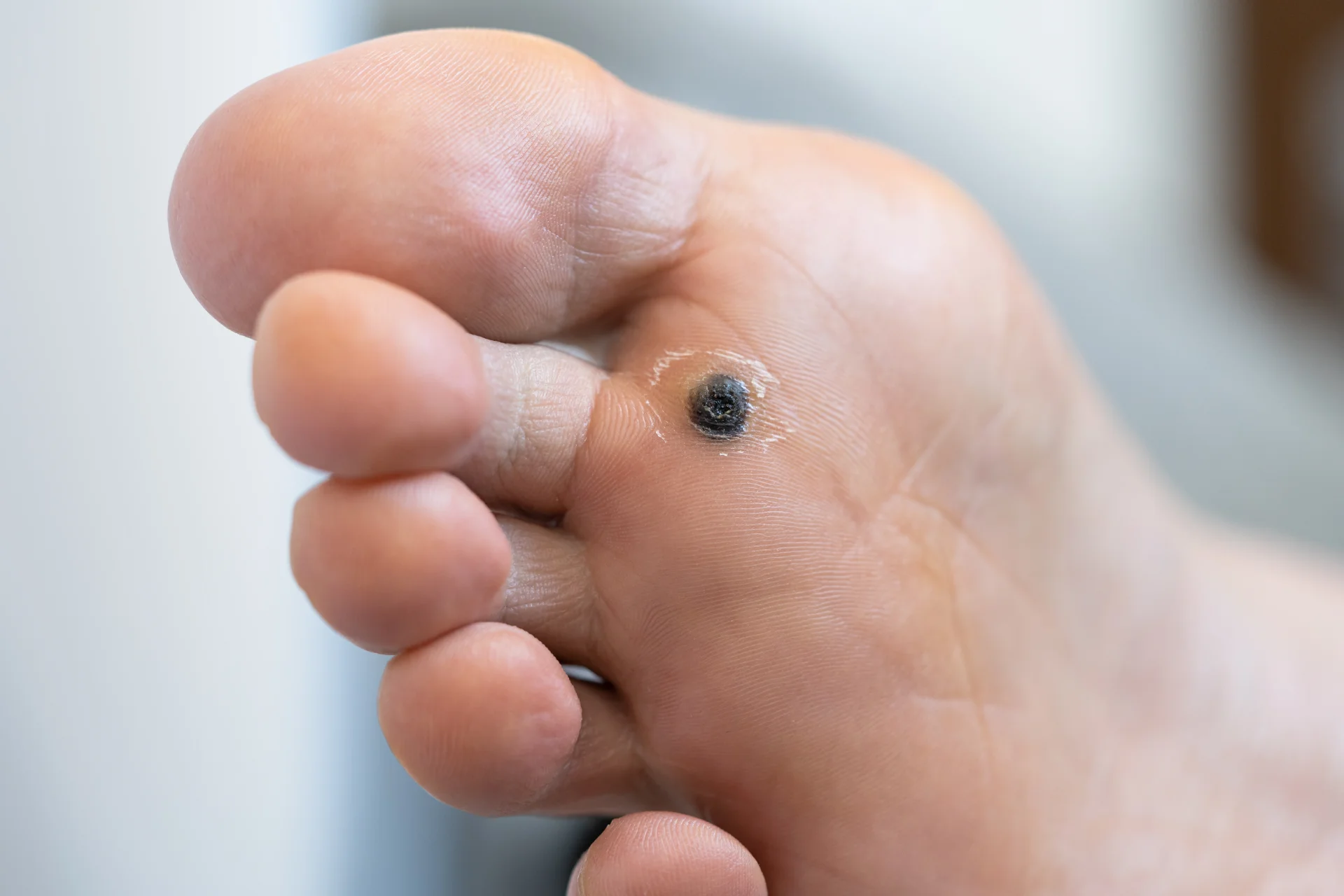
Verucca 1
Verucca 2

Why Verrucas Can Be Painful

Although verrucas are generally harmless, they can cause discomfort when located on weight-bearing areas such as the heel or ball of the foot. Pressure from standing and walking can push the verruca inward, leading to sharp or burning pain. In children and active adults, this can affect mobility, sport, and confidence.

HPV thrives in warm, moist environments, making swimming pools, changing rooms, communal showers, and bathrooms common sources of infection. Verrucas spread through direct contact with infected skin or contaminated surfaces, particularly when the skin is broken or softened.

A podiatrist can confirm whether a lesion is a verruca and advise on appropriate treatment based on factors such as size, location, pain, age, and medical history. At Podiatrust, treatment options may include silver nitrate therapy, cryotherapy, plasma treatment, or advanced options such as SWIFT® verruca treatment.

You should consider professional treatment if a verruca is painful, spreading, bleeding, or not responding to over-the-counter remedies. Early assessment can improve treatment outcomes and reduce the risk of transmission.

At Podiatrust, we provide trusted verruca assessment and treatment, helping patients manage symptoms effectively and return to comfortable, confident movement.